
Wartime U.S. coins tell a clear story of pressure, scarcity, and rapid change. Metal shortages forced the Mint to alter compositions, speeds increased to meet demand, and quality control suffered. For collectors, this created a unique mix: coins that are historically important, mostly affordable, and occasionally extraordinary. A smart approach separates everyday survivors and normal 1944 wheat penny value from the few pieces that justify real premiums.
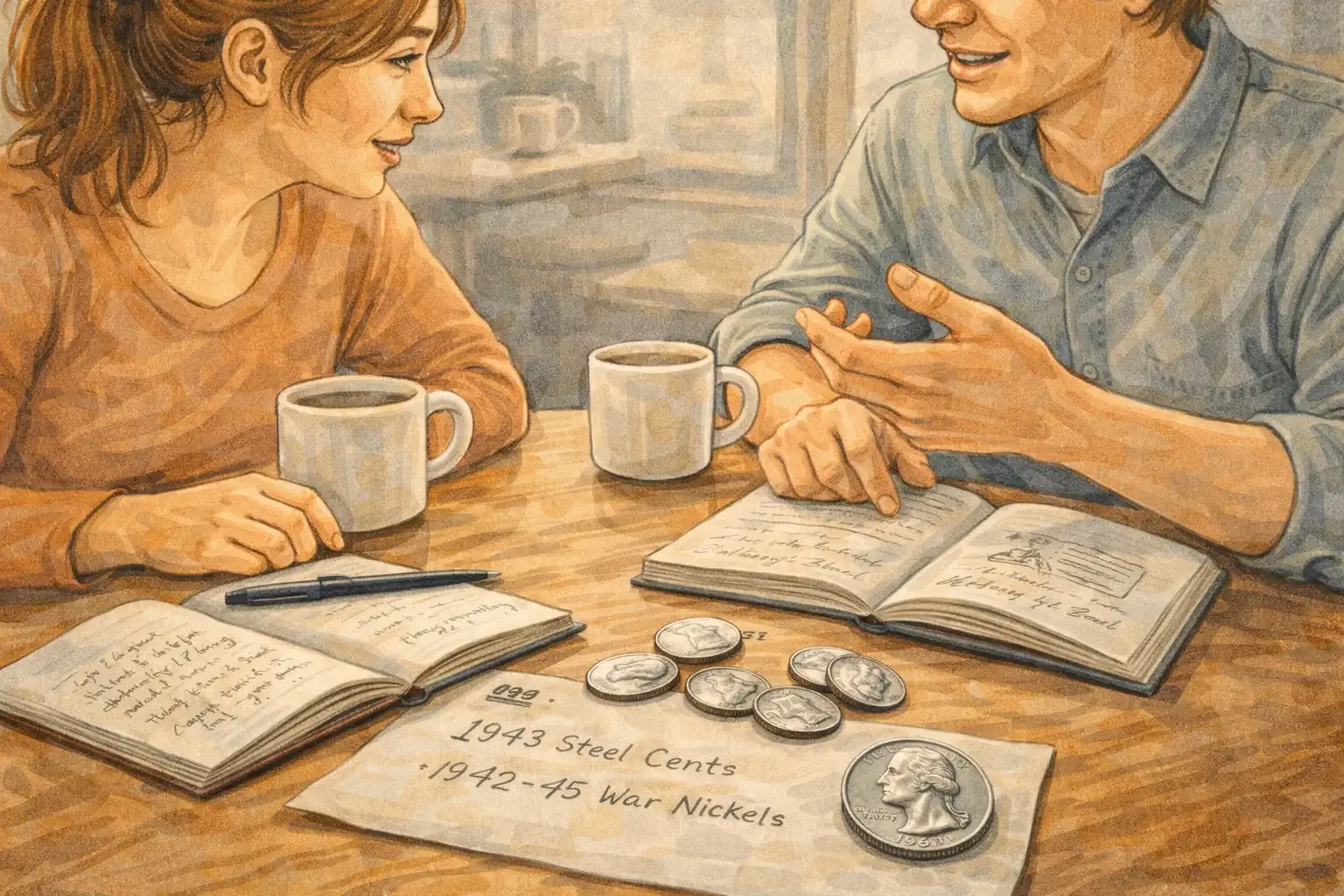
Two periods dominate interest:
- World War II (1941–1945), with drastic metal substitutions
- Earlier conflicts, where silver remained standard but minting stress produced notable varieties
The goal is not to hoard common dates. The goal is to target coins where history directly affected composition, production, or survival.
What Makes a Coin “Wartime”
A wartime coin reflects a documented response to conflict. That response usually appears in one of three ways:
- Metal changes to conserve strategic materials
- Visible design or mintmark adjustments
- Errors caused by accelerated production
Coins that only happen to fall within wartime years, but show no such traits, rarely outperform the market, and a coin identifier app will prove it with auction records.
WWII Steel Cents: A Controlled Experiment
The most recognizable wartime issue is the 1943 Lincoln cent struck on zinc-coated steel. Copper was redirected to ammunition, forcing the Mint to adopt a magnetic planchet for one year.
Key facts that guide smart buying:
- Over 1 billion steel cents struck across Philadelphia, Denver, and San Francisco
- Common MS-65 examples trade in the $10–30 range
- Corrosion and spotting limit high-grade survivors
The value ceiling changes completely with planchet errors. A small number of 1943 bronze cents escaped detection during the transition. These are among the most famous U.S. errors ever recorded.
Verification matters:
- Steel cent weight: about 2.7 grams, magnetic
- Bronze cent weight: about 3.11 grams, non-magnetic
Certified examples dominate the market for a reason. Raw claims carry extreme risk.
Silver Under Pressure: War Nickels
Nickel shortages led to another composition shift. From 1942 to 1945, Jefferson nickels were struck with 35% silver, identified by a large mintmark above Monticello.
These coins remain one of the best entry points into wartime collecting.
Why they work:
- Clear visual identifier
- Silver content supports value
- Wide grade availability
Circulated examples trade close to melt, while high-end mint-state coins show meaningful premiums. Varieties like the 1943/2-P overdate add depth without inflating budgets.
Earlier Conflict Issues Still Matter
Not all wartime coins come from WWII. World War I and pre-war years produced coins that remain practical targets.
Examples include:
- 1917 doubled die obverse cents, tied to early hubbing methods
- WWI-era quarters, still 90% silver and affordable in VF grades
- 1942 Mercury dimes, bridging pre-war and wartime production
These coins anchor thematic collections that mix steel, silver, and documented mint stress.
The Strategic Mindset
A smart approach to wartime U.S. coins follows three rules:
- Buy composition changes, not just dates
- Favor documented varieties and errors
- Prioritize condition and verification through the reliable coin app
Most wartime coins remain inexpensive. A few stand far apart. Understanding why that gap exists is the foundation of a disciplined collection.
Which Wartime Coins Deserve Premiums and Which Do Not
Wartime U.S. coins reward selectivity. Many pieces survive in large numbers and trade close to melt or face-adjacent prices. A smaller group stands apart because composition shifts, varieties, or documented errors changed their supply. The difference shows up quickly once you sort by cause, not by year.
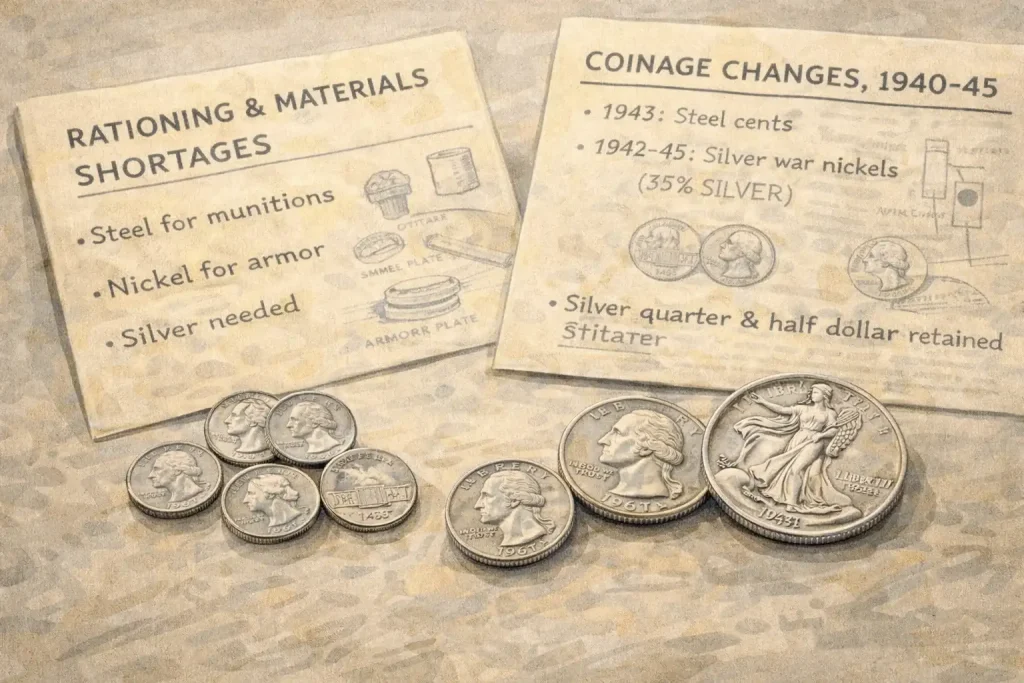
Coins with Built-In Value Drivers
These issues carry structural reasons for demand and tend to hold premiums over time.
1943 Steel Cents (Standard Issues)
- Zinc-coated steel planchets
- Common in all mints
- MS-65 examples: $10–30
They work as historical types, not as appreciation plays.
1943 Bronze Cent Errors
- Copper planchet carryover during transition
- Fewer than two dozen known across all mints
- Six-figure prices are tied to certification and provenance
Weight and magnetism tests screen candidates; only slabs confirm value.
1942–1945 War Nickels
- 35% silver with large mintmark above Monticello
- VF examples trade near melt
- MS-66 and better: $50–200
The 1943/2-P overdate adds a clear premium due to visible diagnostics.
1917 Doubled Die Obverse Cent
- Early hubbing methods produced strong doubling
- Scarcer than most WWII-era errors
- $500–5,000 depending on grade and clarity
1942 Mercury Dime
- Full silver composition during wartime
- Affordable in circulated grades
- Strong demand for Full Bands in higher mint state
Coins That Rarely Outperform
These pieces are historically interesting but saturated in the market.
- Common-date WWII cents without errors
- Heavily worn war nickels bought above melt
- Raw “error” claims without diagnostics
- Uncertified bronze-cent stories
They fit albums. They do not justify premiums.
Value Snapshot by Category
| Wartime Coin | Composition Shift | Value Range (MS-65) |
| 1943 Steel Cent | Zinc-coated steel | $10–30 |
| 1942–45 War Nickel | 35% silver | $5–200 |
| 1943 Bronze Cent | Copper error | $100k+ |
| 1917 DDO Cent | Hub doubling | $500–5,000 |
| 1942 Mercury Dime | Silver wartime | $20–100 |
The Premium Test
A wartime coin earns a premium only when history altered production in a measurable way. Metal changes, overdates, and planchet errors pass that test. High mintages without those factors do not.
Verification, Buying Discipline, and Building a Wartime Set
Wartime U.S. coins attract attention for a reason. They combine history with tangible production changes. That attention also attracts counterfeits and inflated claims. A smart approach relies on verification first, buying second.
Simple Tests That Prevent Costly Mistakes
Most wartime coins can be screened quickly with basic tools.
- Steel cents: check magnetism and weight around 2.7 grams
- War nickels: look for the large mintmark above Monticello and a faint silver edge
- Silver issues: confirm correct weight and diameter
These steps eliminate the majority of false leads before money changes hands.
Certification and Provenance Matter
High-value wartime coins depend on trust. That trust comes from third-party grading.
- PCGS and NGC holders provide authentication
- Slabs improve liquidity and resale options
- Provenance supports long-term value
This is especially true for bronze 1943 cents and overdates, where raw examples carry unacceptable risk.
Using Digital Tools for Fast Confirmation
Estate sales and mixed lots remain productive hunting grounds, but volume slows judgment. Tools like the Coin ID Scanner app help streamline identification. A single photo on Android or iOS produces a detailed coin card with year of minting, country, coin type, edge, composition, diameter, weight, and indicative price from a database exceeding 187,000 coins.
This makes it easier to confirm wartime composition, flag potential errors, and discard common pieces quickly.
As collections grow, collection management tools keep wartime themes organized. Premium features such as smart filters and the AI Helper assist with tracking varieties and identifying gaps without replacing manual verification.
Budgeting a Wartime Collection
A focused wartime set does not require large capital.
A realistic structure:
- $100–150 for steel cents and war nickels in solid grades
- $200–300 for certified varieties or higher mint state silver
- Long-term goal: one key error or overdate
Staying under $500 remains achievable with discipline.
Wartime U.S. coins reward strategy, not accumulation. Composition shifts, verified errors, and documented varieties define value. Common survivors fill context. Certified standouts anchor collections. Collectors who follow evidence instead of hype build wartime sets that hold both historical and financial weight.