Collecting U.S. pennies remains one of the most accessible and rewarding entry points in numismatics. Experienced numismatists often recommend the penny series to newcomers because it combines depth, history, and discovery at a very low cost.
The key to staying within budget is strategy. Rather than chasing expensive rare pennies or trying to complete the entire Lincoln series at once, seasoned collectors focus on narrow goals that build confidence. A well-planned approach lets hobbyists grow meaningful collections for under $200 per year—while still leaving room for small upgrades and interesting finds along the way.

Choosing a Focus That Fits a Modest Budget
A structured collecting path makes a huge difference, especially when starting small. The following approaches keep costs manageable and provide a sense of progress early on:
1. Build a Basic Wheat Penny Set (1909–1958)
Wheat cents remain affordable in circulated grades.
- Common dates cost $0.10–$0.50 each.
- Mid-range semi-keys stay under $5.
A simple 40-coin folder creates quick momentum without major investment.
2. Collect Modern Memorials by Decade (1959–2008)
Great for beginners and young hobbyists:
- Most circulate freely.
- Many can be found for face value.
- Completing a decade set adds structure and keeps interest high.
3. Assemble a Type Set
A type set includes one example of each major design:
- Flying Eagle
- Indian Head
- Wheat
- Memorial
- Shield
This route usually costs $20–$100, depending on condition. Common dates like the 1943 steel cent keep the set affordable while still offering historical variety.
4. Avoid High-Cost Keys Early
Coins such as the 1909-S VDB or 1914-D quickly drain a beginner’s budget. Experts advise saving them for later, once collecting habits are established.
Smart Ways to Source Pennies on a Budget
Building a U.S. penny collection does not require expensive purchases or rare coins. Experienced numismatists consistently emphasize where you source your coins, not how much you spend. With a few strategic habits and a reliable coin identifier uploaded, collectors can assemble impressive sets at face value or just a few dollars per month. The goal is simple: maximize volume, minimize cost, and target opportunities that produce meaningful finds.
Bank Rolls: The Most Cost-Effective Method
Roll hunting remains the top recommendation for collectors working with a modest budget. Banks still distribute mixed circulation pennies that contain older dates, error varieties, and high-grade moderns.
Why bank rolls work:
- Cost: $10 for 1,000 pennies
- Easy access to pre-1982 copper
- Frequent discoveries of 1970s and 1980s varieties
- Occasional Wheat cent appearances
The process is simple. Buy customer-wrapped rolls, search at home, pull keepers, and return the rest. It is essentially cost-neutral collecting, since unwanted coins go back into circulation.
Coinstar Reject Trays and Garage Sales
These two sources produce surprising finds for almost no cost.
Coinstar reject trays: Machines reject foreign coins, off-metal strikes, and occasional U.S. cents with unusual surfaces. Many finds are free and require only a quick check.
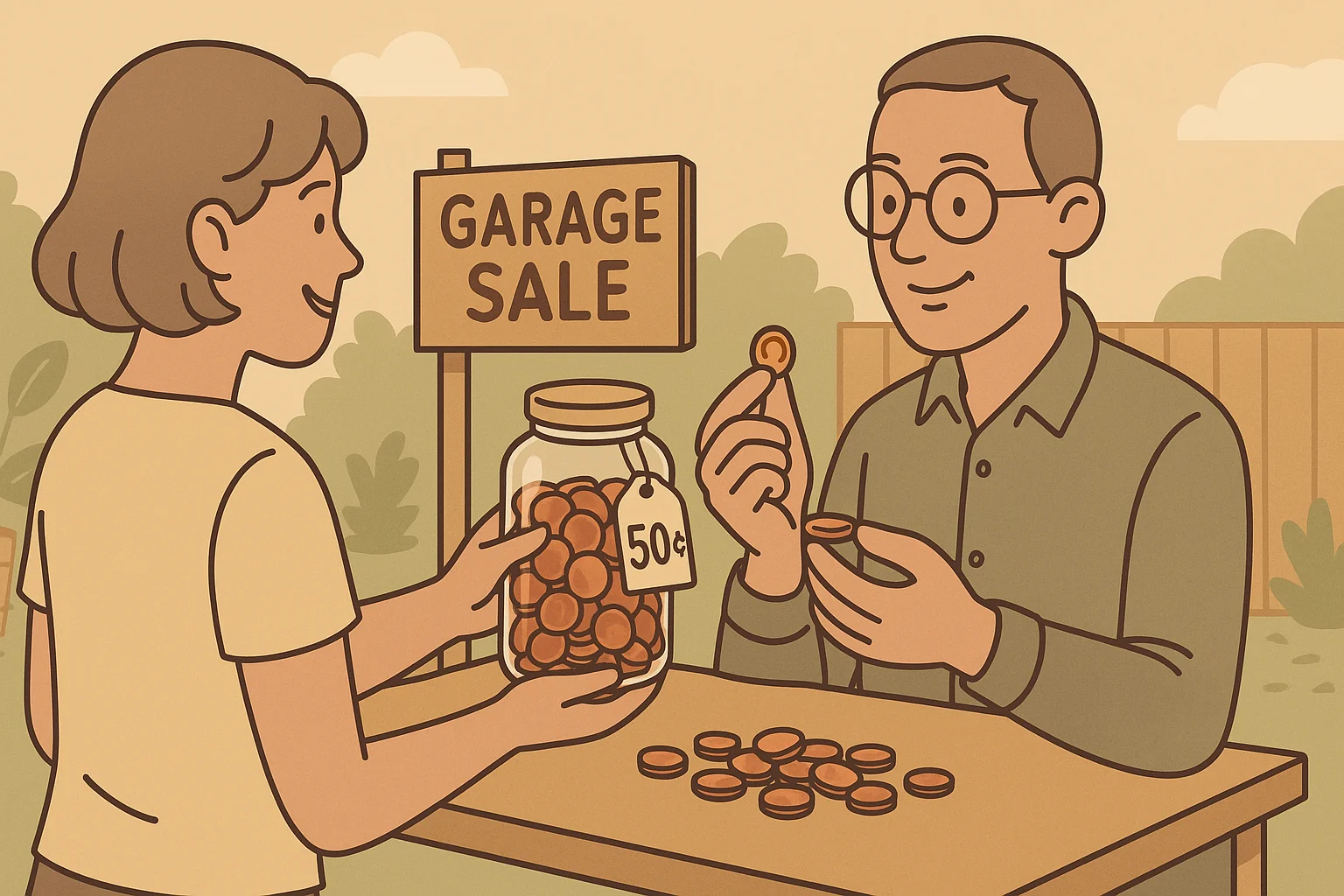
Garage sales and flea markets: Bulk penny jars often sell for 25–50 cents per handful. These lots frequently include Wheat cents, copper memorials, and overlooked varieties.
Local Coin Shops and Shows
Shops and shows remain stable, low-pressure places to buy affordable pennies.
- Circulated Wheat cents: 5–25 cents each
- Bulk Memorial cents: Face value
- Mixed-date rolls: $2–$4
ANA’s dealer locator helps identify reputable sellers. Many allow bulk discounts if you pick coins directly from their junk boxes.
Online Marketplaces—But With Caution
eBay, APMEX, and GovMint offer starter rolls, but collectors should filter by sold items to avoid overpaying. Stick to ungraded lots under $2 per coin and avoid listings with vague descriptions or inflated shipping.
Source Smart, Not Expensive
The best budget collections grow from steady, low-cost sourcing—not from chasing expensive keys. Section 3/3 will cover identification tips, storage essentials, digital verification tools, and long-term strategies for building a meaningful penny collection under $200 per year.
Identifying Keepers, Storing Your Finds, and Growing a Collection Over Time
A budget-friendly penny collection becomes truly rewarding when you learn how to spot valuable pieces, store them correctly, and build long-term habits that keep costs low. Experienced numismatists agree: success comes from consistency, not high spending. The final step is developing simple techniques that help you identify varieties, protect your coins, and plan gradual upgrades.
Identifying Valuable Pennies Efficiently
Even inexpensive collections benefit from strong identification skills. Modern and vintage pennies offer countless varieties that appear in circulation.
Key traits to check:
- Date and mintmark combinations (P, D, S)
- Copper vs. zinc compositions (3.11 g vs. 2.5 g)
- Doubled dies on dates, lettering, or the motto
- Close AM or Wide AM reverse spacing
- Off-center or clipped planchets
A simple 10x loupe reveals most of these features. The goal is not to memorize every variety, but to understand which details deserve a second look.
Using Digital Tools to Verify Finds
Digital identification tools allow collectors to confirm details quickly without overspending on catalogs. The Coin ID Scanner app is especially useful as a coin value checker for beginners and advanced collectors working on a modest budget.
How it helps:
- Photo-based identification from camera or gallery
- A complete coin card showing minting years, composition, diameter, weight, edge, and price
- Collection Management for tracking every penny you keep
- An Extensive Database of over 187,000 global coins
- Smart filters (paid) and AI Coin Helper for variety checks
These features streamline sorting, especially when working through rolls or bulk batches.
Storing Pennies Safely Without Overspending
Protection matters more than display. Affordable options include:
- 2×2 cardboard holders (≈$0.10 each)
- Whitman folders for under $10
- Binder pages with non-PVC flips
- Dry storage areas away from heat and humidity
Avoid cleaning coins—this destroys originality and reduces value.
Long-Term Budget Strategies
A steady, low-cost approach builds lasting collections:
- Join local clubs or online forums to trade duplicates.
- Use ANA educational resources for free learning.
- Upgrade one coin at a time instead of buying full sets.
- Set a small monthly budget (≈$10–$20).
- Track progress in your folders or digital collection.
A U.S. penny collection does not require a large financial commitment. With strategic sourcing, reliable identification tools, and smart storage habits, collectors can build meaningful sets for under $200 per year. Over time, experience—not spending—becomes the real engine behind a strong and satisfying penny collection.